
Decide again
Discharge opens a new consent screen. Program access never carries forward automatically.
Cartha Recovery can stay with the member after discharge—but the prior program remains connected only through a new, explicit choice.
A resident leaves the house or a client completes treatment. The familiar schedule, nearby staff, and easy in-person request are gone. Alumni follow-up often becomes periodic outreach that depends on the organization finding the person at the right moment.
Cartha reverses the direction: the member keeps a controlled door back and uses it when support is actually needed.
Discharge opens a new consent screen. Program access never carries forward automatically.
See which alumni person or role receives a request and when they normally respond.
Review, revoke, export, or close the alumni connection without exposing private reflection.
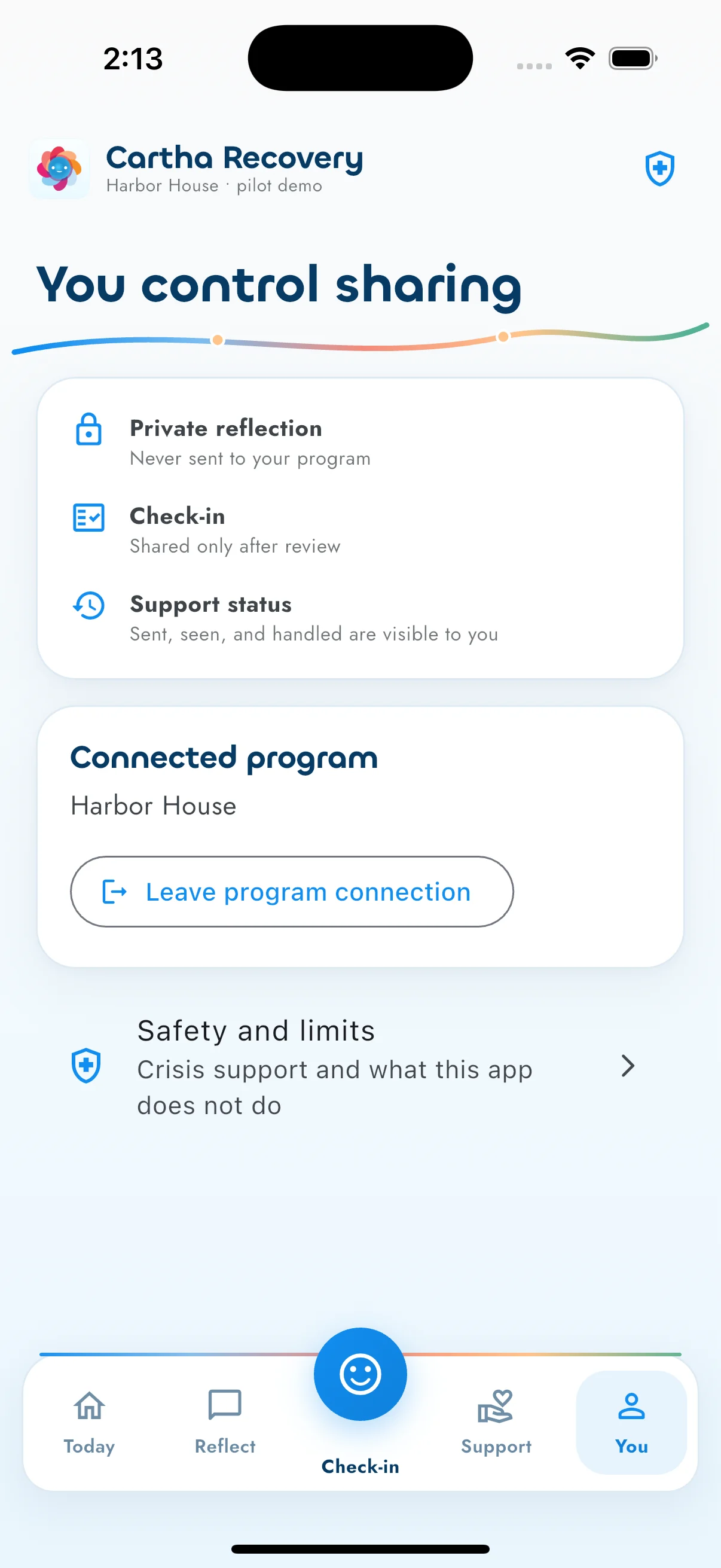
A later organization receives nothing by default. Carrying forward history, context, or an outcome requires a new member choice for a named purpose.
Start with the named responder, hours, fallback, current follow-up process, and purpose for any alumni outcome.